Why Do Phone Cases Have Magnets? 5 Reasons (and When to Avoid Them)
JupiterVehicles is reader-supported. As an Amazon Associate, we earn from qualifying purchases.
A few years ago, a magnet in a phone case was unusual. Now many cases have a ring of magnets built into the back. The main reason is magnetic accessories: chargers, car mounts, wallets and grips that snap onto the phone. A case that blocks or weakens those magnets breaks the whole system, so case makers add their own.
Here are the five main reasons phone cases have magnets, and when you might want a case without them.
Table of Contents
The Short Answer
Phone cases have magnets so the phone can still attach to magnetic accessories through the case. On iPhone, the case’s magnets line up with the MagSafe magnets inside the phone. On many Android phones, which don’t have built-in magnets, the case adds the magnetic ring that the phone itself lacks.
Reason 1: To Keep MagSafe Working Through the Case
Since the iPhone 12, most iPhone models have a ring of magnets behind the back glass. Apple explains that MagSafe chargers and battery packs snap to the back of iPhone or its MagSafe case, and the magnets ensure proper alignment for fast wireless charging.
A regular plastic or silicone case puts distance between the phone’s magnets and the accessory, which weakens the hold. A MagSafe case places its own magnet ring right where the phone’s ring sits, so accessories attach with the same snap.
Reason 2: To Add Qi2 Magnetic Charging to Android Phones
The Wireless Power Consortium says Qi2 devices feature magnetic attachment that aligns devices and chargers for better efficiency, faster charging and easier use. Some Android phones support Qi2 charging but don’t have magnets built in, so they rely on a magnetic case to snap onto Qi2 chargers. Look for “Qi2 Ready” or “magnetic” case listings for your model.
Reason 3: To Hold Car Mounts
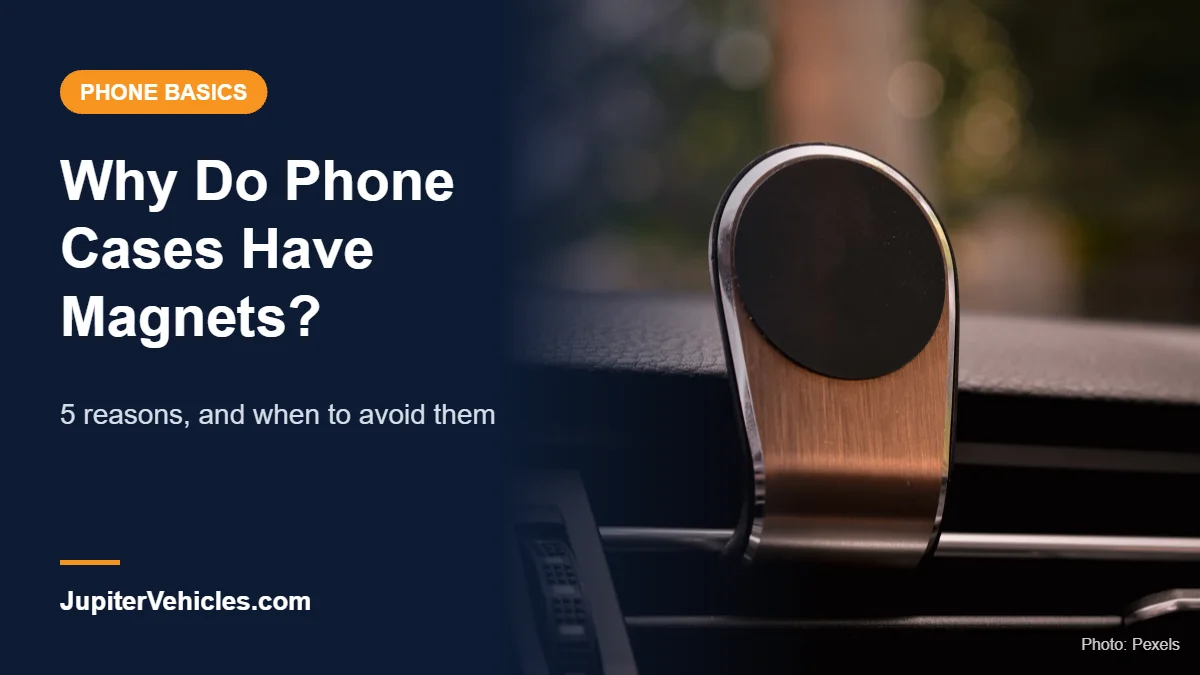
Magnetic car mounts are one of the biggest reasons people buy magnetic cases. The phone snaps on and off with one hand, with no clamps to squeeze. A strong case magnet helps the phone stay put over bumps. See our list of the best iPhone car mounts.
Reason 4: To Attach Wallets, Grips and Stands
Magnetic card wallets, finger grips, kickstands, tripods and battery packs all use the same ring. A magnetic case makes these accessories swappable without sticky adhesive.
Reason 5: To Keep Folio and Flip Covers Closed
Long before MagSafe, folio cases used small magnets in the flap to keep the cover shut. Some folio cases also use a magnet to trigger the phone’s sleep and wake sensor when the cover opens or closes.
Are Magnets in Phone Cases Safe?
For the phone, generally yes. Phones with MagSafe are designed to work with magnetic accessories. A few cautions apply:
- Cards and key fobs: Apple advises not to place credit cards, security badges, passports or key fobs between your iPhone and a MagSafe charger, because the magnetic strips or RFID chips may be damaged.
- Medical devices: Apple notes that devices with magnets can interfere with medical devices such as pacemakers and that many manufacturers recommend keeping them at least 6 inches (15 cm) away, or 12 inches (30 cm) when wirelessly charging.
- Compass accuracy: a strong magnet near the phone can affect compass readings in map apps.
When to Choose a Case Without Magnets
- You never use magnetic chargers or mounts
- You want the thinnest possible case
- You keep cards with magnetic strips in a wallet case
- You use a clamp-style car mount (see the clamp pick in our best car phone mount guide)
How to Tell if a Case Has Magnets
- Look for a visible ring outline on the inside or back of the case
- Check the listing for “MagSafe,” “Qi2” or “magnetic”
- Hold a fridge magnet or MagSafe charger to the back: it should snap firmly to the center
Frequently Asked Questions
Do I need a MagSafe case for a magnetic car mount?
If your iPhone has MagSafe, a thin case can work, but a MagSafe case gives a much stronger hold. Android phones usually need a magnetic case.
Do magnetic cases affect wireless charging?
A proper MagSafe or Qi2 case is designed to allow wireless charging. Cases with metal plates or thick wallet sections can block or slow it.
Can a magnetic case damage my phone?
MagSafe iPhones are designed for magnetic accessories, so a quality magnetic case is fine. Avoid placing cards between the phone and a charger.
Why does my case have magnets in the flap?
Folio cases use flap magnets to stay closed and, on some phones, to turn the screen on or off when you open or close the cover.
The Bottom Line
Phone cases have magnets so the phone can keep working with MagSafe and Qi2 chargers, car mounts, wallets and grips through the case. On Android phones, the case often supplies magnets the phone doesn’t have. If you don’t use magnetic accessories, a non-magnetic case is a fine choice.