
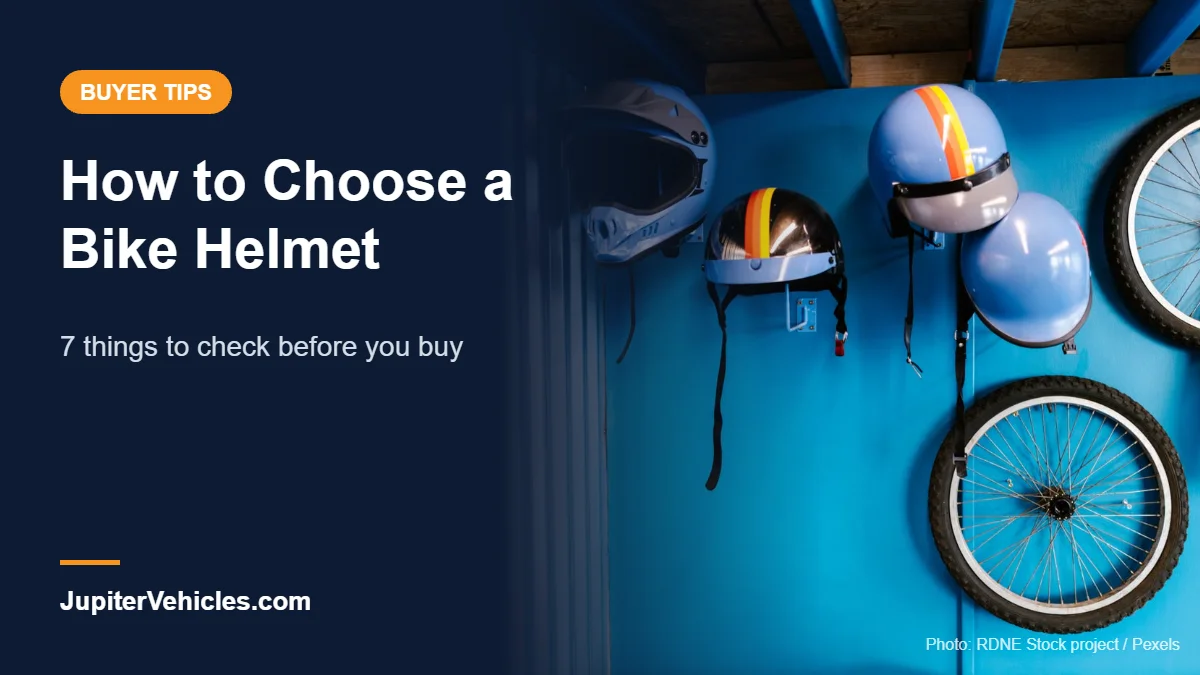
How to Choose a Bike Helmet: 7 Things to Check Before You Buy
JupiterVehicles is reader-supported. As an Amazon Associate, we earn from qualifying purchases.
A good bike helmet is one that’s certified, scores well in independent impact tests, fits your head properly, and suits the way you ride. Here’s what to check, in order of importance.
Table of Contents
1. Look for the CPSC Label
In the US, bicycle helmets made since 1999 must meet the CPSC safety standard under 16 CFR 1203. Look inside the helmet for a label that says it complies with the U.S. CPSC Safety Standard for Bicycle Helmets. If it’s missing, don’t buy it.
2. Check Independent Lab Ratings
The CPSC standard is a minimum. To compare helmets beyond that, use the Virginia Tech bicycle helmet ratings, which test helmets with the Insurance Institute for Highway Safety. Helmets get 0 to 5 stars based on concussion risk in 24 impact tests, and Virginia Tech recommends 4 or 5 stars.
This matters because popularity isn’t the same as protection. Some best-selling budget helmets earn only 1 or 2 stars, while several 5-star helmets cost under $100.
3. Get the Right Size
Measure around your head about an inch above your eyebrows with a soft tape measure. Compare it with the maker’s size chart. If you’re between sizes, try both if you can.
NHTSA’s helmet fitting guide also advises: never buy a helmet to grow into. Wear one that fits now.
4. Check the Fit
A helmet that fits should:
- Sit level on your head, low on the forehead (about two finger widths above the eyebrows)
- Feel snug all around before you tighten the dial
- Not rock forward, back or side to side
5. Match It to Your Riding
| Riding style | Look for |
|---|---|
| Road | Light weight, lots of vents, aerodynamic shape |
| Commuting | Visibility, rear light, easy fit, visor optional |
| Mountain biking | More rear coverage, visor, goggle compatibility |
| E-bikes | Extra coverage; some helmets are certified to the Dutch NTA 8776 e-bike standard |
6. Consider Rotational Protection
Many helmets now include a system like MIPS, Giro’s Spherical, or Lazer’s KinetiCore, designed to reduce rotational forces in some impacts. Virginia Tech’s tests measure rotational velocity too, so the star rating already reflects how well the whole helmet performs.
7. Think About Comfort and Visibility
- Ventilation: More vents keep you cooler on long or hot rides.
- Weight: Lighter helmets are more comfortable over hours.
- Color and lights: Bright colors and built-in lights help others see you. Pair them with good bike lights.
Good Places to Start

- MIPS Protection and CPSC Bicycle Helmet: Integrated MIPS technology is designed to help reduce certain rotational forces from angled impacts. The helmet meets U.S. CPSC 16 CFR Part 1203 for bicycle helmets.
- USB-Rechargeable Rear LED Light: The removable rear light offers multiple lighting modes to support visibility during commutes, evening rides, and everyday cycling.
- Lightweight In-Mold Construction with 23 Vents: A polycarbonate shell, EPS liner, airflow channels, and 23 vents balance lightweight protection and ventilation for longer rides.
- Adjustable Fit for Adults: The rear adjustment system, adjustable straps, and removable padding help create a secure, comfortable fit. Measure head circumference and check the size chart before ordering.
- Road and Commuter Cycling: The low-profile design suits road cycling, urban commuting, fitness riding, and recreational bicycle use. Not intended for motorcycle, moped, ATV, or motor vehicle use.
The P2R A20 MIPS (about $60) earned 5 stars from Virginia Tech and has a rear light. For more options, see our list of the best bicycle helmets.
FAQ
Are expensive bike helmets safer?
Not always. Virginia Tech has rated several helmets under $100 at 5 stars, while some pricier models score lower.
How should a bike helmet fit?
Snug and level, about two finger widths above your eyebrows, with straps forming a V under each ear and room for about two fingers under the chin strap, per NHTSA.
Should I buy a used bike helmet?
It’s best not to. You can’t tell if a used helmet has been in a crash, which can damage the foam.
2 Comments