Bicycle Safety Light Setup: How to Be Seen Day and Night
JupiterVehicles is reader-supported. As an Amazon Associate, we earn from qualifying purchases.
Owning good lights is half the job. The other half is setting them up so drivers notice you, day and night, without blinding anyone or running out of battery mid-ride. This guide walks through a practical bicycle safety light setup.
For product picks, see bike safety light and the best bike tail lights 2025.
Table of Contents
The Legal Minimum at Night
California’s Vehicle Code 21201 is a common reference: a white front light visible from 300 feet, a red rear reflector or light visible from 500 feet, and pedal and side reflectors. NHTSA also recommends a white front light and red rear light and reflectors at night or in poor visibility. Check your state’s rules.
Daytime Setup
| Light | Mode | Why |
|---|---|---|
| Rear | Bright daytime flash | Catches drivers’ attention from far away |
| Front | Daytime pulse or flash | Helps oncoming and turning drivers notice you |
| Extras | Optional | Wheel lights matter less in daylight |
Nighttime Setup
| Light | Mode | Why |
|---|---|---|
| Front | Steady beam, aimed slightly down | Lets you see the road without dazzling others |
| Rear | Flash, or one steady plus one flashing | Visibility and distance judgment |
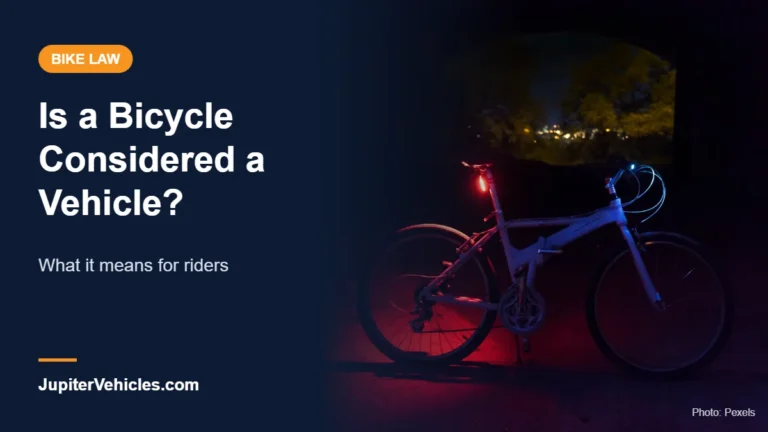
| Side | Wheel lights or reflectors | Seen at intersections |
| Helmet or backpack | Low steady or flash | Height above car hoods |
Mounting Heights and Angles
- Tail light: on the seatpost or saddle rails, pointing straight back, not blocked by bags or a jacket.
- Headlight: centered on the bars, angled to light the road ahead.
- Second rear light: on a helmet or backpack for height.
Battery Planning
- Charge lights after every long or night ride.
- Know your runtime on the mode you use most.
- Use lights with battery indicators.
- Carry a small backup light on long rides.
Avoid Common Mistakes
- Tail light hidden behind a saddlebag
- Headlight aimed straight ahead into drivers’ eyes
- Using a flashing headlight on dark paths where others need to judge distance
- Running out of battery on the way home

- One of a kind extremely bright 350 lumen tail light stands out day and night on busy streets. Patent pending adjustable flash speeds lets you maximize motorist awareness with its unique and easy to use 2 button control
- 7 lighting modes for day and night use: -Steady – Zoom – Steady Pulse - Bzzz Flash - Triple Flash - Daylighting Flash - Random Flash. Wide range run time of 2 to 200 hours with flash speed adjustment (see image #4 for run times)
- Steady Pulse shines a steady beam to help motorists gauge their distance while overlapping pulses keep them alert at night. Daylighting Flash bursts lightning-like flashes to make you stand out on busy roads in broad daylight
- Built to endure road cycling conditions with durable & water resistant body, and hard seat post & seat stay mounts, all while keeping a compact form & weighing only 75 grams. Designed for convenience with USB rechargeable design & low battery indicator
- Designed, engineered, and assembled in the USA. Founded in 1991, Cygolite is the proven bicycle light experts with exclusive designs and innovations crafted into quality products that are on the leading edge of safety
Frequently Asked Questions
Should I use bike lights during the day?
Yes. Daytime flashing tail lights make you more noticeable.
Is flashing or steady better for a rear light?
Flashing catches attention. Many riders run one steady and one flashing at night.
Where is the best place for a bike tail light?
Seatpost or saddle rails, pointing straight back and unobstructed.
How often should I charge my bike lights?
After long or night rides, and check the battery indicator before you leave.
The Bottom Line
A good bicycle safety light setup uses bright flashing lights in daylight, a steady down-angled headlight and visible rear light at night, side and height extras, and a charging routine so your lights never die mid-ride.