How Does an Electric Bike Work? Motors, Batteries & Pedal Assist
An electric bike, or e-bike, combines a rechargeable battery, an electric motor, sensors, and a controller to help you ride with less effort. Depending on the model, the motor assists when you pedal, responds to a throttle, or supports both operating methods.
You still steer, balance, and brake the bicycle as usual. Electric assistance can make accelerating, climbing hills, and riding into a headwind easier, although the amount of help depends on the bike and riding conditions.
Table of Contents
How Does an Electric Bike Work in Simple Terms?
An e-bike stores electrical energy in its battery. When the system is activated, sensors detect the required rider input. The controller processes the signals and regulates power to the motor, which converts electrical energy into mechanical power to help propel the bicycle.
- The battery stores energy: It supplies electrical power to the drive system.
- The sensors detect input: Depending on the design, they detect pedal rotation, pedaling force, or another relevant input.
- The controller manages power: It regulates the assistance according to the rider’s settings and the system’s operating limits.
- The motor provides assistance: It helps turn the wheel directly or supplies power through the drivetrain.
- The rider remains in control: You steer, brake, select gears when available, and adjust the assistance level.
On a pedal-assist model, motor assistance generally depends on pedaling. A throttle-equipped model may also provide motor power without pedaling, subject to its design and applicable regulations.
What Are the Main Parts of an Electric Bike?
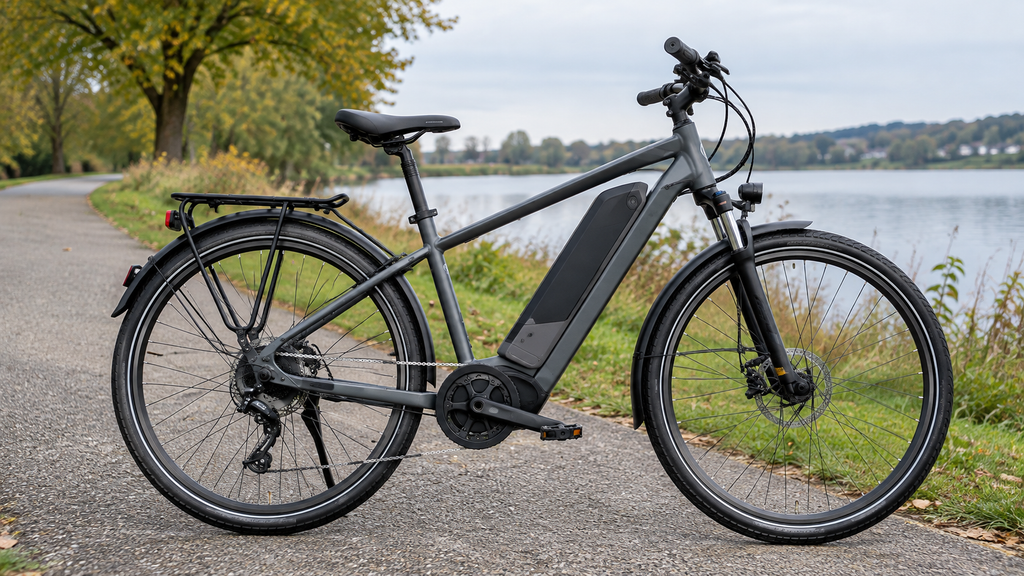
The electrical drive system works alongside the bicycle’s mechanical components. Each part has a different function.
1. Battery
The battery stores the electrical energy used by the motor and, on many models, other electrical components. Rechargeable lithium-ion batteries are common in modern e-bikes.
Battery capacity is often measured in watt-hours (Wh). This indicates how much energy the battery can store. A larger capacity can support a longer ride under comparable conditions, but it does not guarantee a particular distance.
Actual range depends on rider and cargo weight, terrain, wind, temperature, tire pressure, battery condition, motor efficiency, and the selected assistance level.
2. Electric Motor
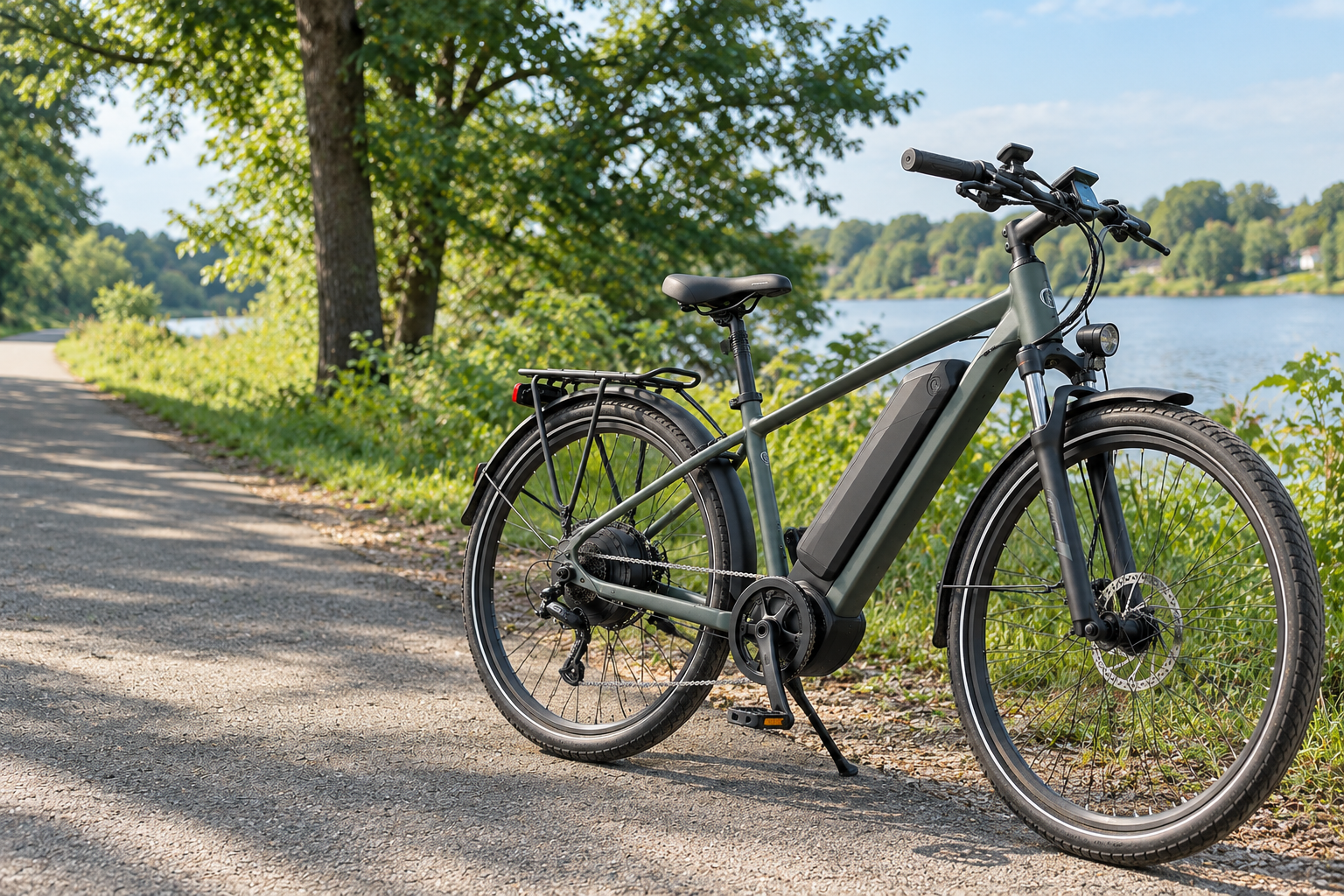
The motor converts electrical energy into mechanical assistance. Its location influences how power reaches the wheel and how the bicycle uses its gears.
- Hub motor: Located inside a wheel hub, commonly in the rear wheel. It applies driving force directly at that wheel.
- Mid-drive motor: Located near the pedals and crankset. It transfers assistance through the bicycle’s drivetrain, allowing the selected gears to influence performance on different terrain.
Neither design is automatically best for every rider. Consider the terrain, intended use, budget, maintenance requirements, and riding preferences when comparing e-bikes.
3. Controller
The controller regulates the electrical power supplied to the motor. It processes sensor signals and responds to the selected assistance level and other inputs supported by the particular e-bike.
Think of it as the system’s traffic manager. It coordinates the battery, motor, and rider controls so that assistance stays within the system’s programmed limits.
4. Pedal-Assist Sensors
Sensors tell the electrical system when and, on some models, how strongly the rider is pedaling. Two common types are cadence sensors and torque sensors.
A cadence sensor detects pedal rotation. A torque sensor measures the force applied to the pedals. Some systems combine multiple sensor inputs to determine how the motor should respond.
5. Display and Handlebar Controls
Many e-bikes have a display or control unit showing information such as battery status, speed, and the selected assistance level. Available information varies by model.
Handlebar controls may let you change assistance modes, adjust settings, or operate a throttle if the bike has one. Learn the controls before riding and avoid looking away from the road for extended periods.
6. Pedals, Gears, Chain, and Brakes
An electric bike remains a bicycle with a mechanical drivetrain and braking system. A mid-drive motor supplies power through the drivetrain, while a hub motor applies driving force at the wheel.
Gears help you manage pedaling effort, and brakes slow or stop the bicycle. Motor assistance does not eliminate the need for properly maintained brakes, tires, wheels, and drivetrain components.
How Does Pedal Assist Work?
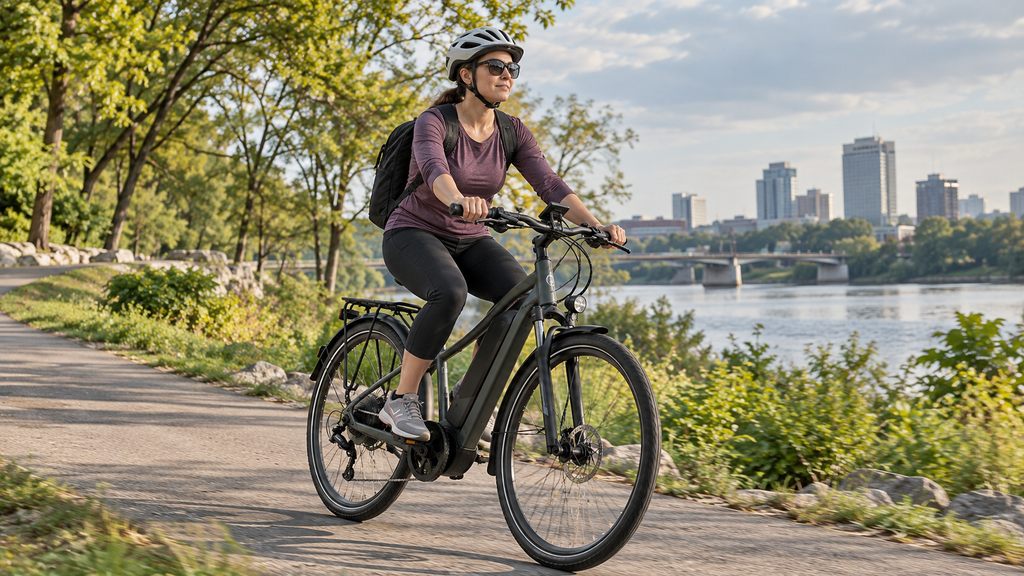
A pedal-assist system, commonly called PAS, adds motor power when the system detects the required pedaling input. You continue pedaling while the motor supplements your effort.
- You start turning the pedals.
- A sensor detects pedal movement or force.
- The sensor sends information to the controller.
- The controller determines the appropriate assistance based on the system’s settings and limits.
- The motor supplies additional power to help propel the bicycle.
Many e-bikes offer multiple assistance levels. A lower setting provides less motor support, while a higher setting requests more assistance, subject to the bike’s capabilities and operating limits.
Cadence Sensors vs. Torque Sensors
A cadence sensor detects whether or how quickly the pedals are turning. Depending on the system’s programming, assistance may feel relatively consistent once pedaling begins.
A torque sensor measures how much force the rider applies to the pedals. The motor can use this information to adjust assistance in response to changes in effort, creating a riding experience that may feel more closely connected to the rider’s input.
Sensor type alone does not determine ride quality. Sensor tuning, controller programming, motor design, and the selected assistance level also influence how an e-bike feels.
How Does an E-Bike Throttle Work?
Some electric bikes include a throttle that requests motor power without requiring the rider to pedal. Depending on the design, it may be operated with a thumb control or a twist grip.
When the rider activates the throttle, the control system interprets the request and supplies motor power within its programmed limits. The amount of assistance depends on the bike’s design and settings.
Not every e-bike has a throttle. In the United States, throttle operation and motor-assisted speed limits can also affect how a bicycle is classified under applicable laws.
Hub Motor vs. Mid-Drive Motor: What’s the Difference?
| Comparison | Hub Motor | Mid-Drive Motor |
|---|---|---|
| Location | Inside a wheel hub | Near the pedals and crankset |
| Power delivery | Drives the wheel directly | Transfers power through the drivetrain |
| Effect of bicycle gears | Motor drive is generally independent of bicycle gear selection | Selected gears influence the motor’s relationship to wheel speed and climbing effort |
| Potential advantages | Can offer a straightforward drive arrangement | Can make effective use of the bicycle’s gearing |
| Considerations | Wheel removal and motor-specific servicing may require extra care | Drivetrain wear and service requirements depend on the system and riding conditions |
Compare complete bikes rather than choosing by motor location alone. Fit, brakes, battery capacity, service support, component quality, and intended riding conditions all matter.
How Far Can an Electric Bike Go on One Charge?
There is no single range that applies to every e-bike. Two bicycles with similar battery capacities can cover different distances because their motors, controllers, tires, riding conditions, and riders differ.
- Battery capacity: A higher watt-hour rating means more stored energy, all else being equal.
- Assistance level: Higher assistance generally uses more energy under comparable conditions.
- Terrain: Frequent climbing can increase energy consumption.
- Rider and cargo weight: More total weight can increase the effort required to move the bike.
- Weather and wind: Headwinds and cold conditions can affect energy use and battery performance.
- Tire pressure and maintenance: Poor tire pressure or mechanical drag can reduce efficiency.
- Riding style: Repeated hard acceleration and frequent stops can increase energy demand.
Use the manufacturer’s range estimate as a starting point, not a guarantee. If you commute regularly, allow a reserve for changing weather, detours, hills, and battery aging.
How Do You Charge an Electric Bike?
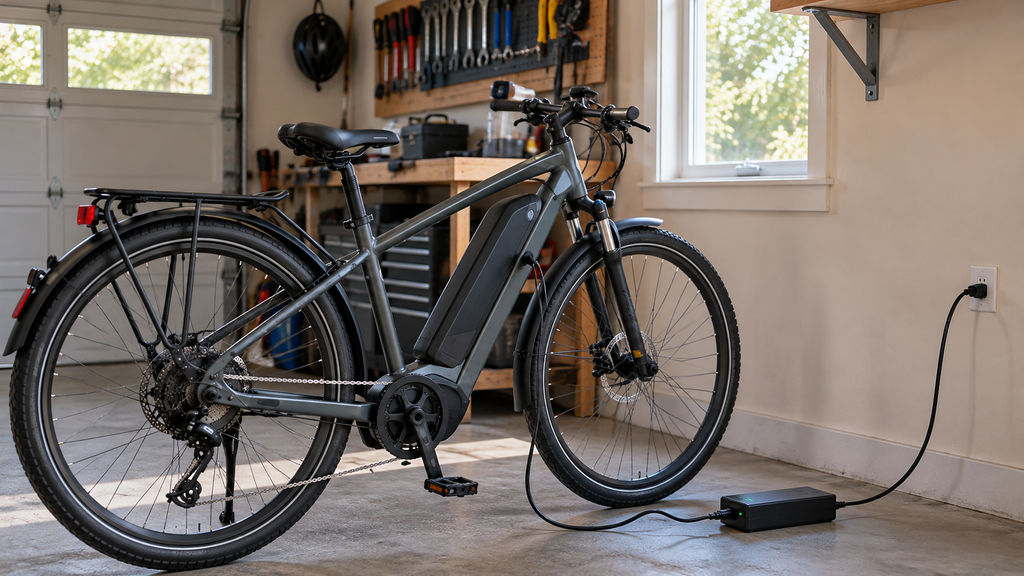
An e-bike battery is recharged using a charger approved for the particular battery and electrical system. Charging procedures vary, so follow the owner’s manual.
- Inspect the battery, charger, and cables for visible damage.
- Use only the charger supplied with or specifically approved for your e-bike.
- Charge in the location and conditions recommended by the manufacturer.
- Follow the manufacturer’s instructions for monitoring and disconnecting the charger.
- Store and maintain the battery according to the owner’s manual.
Never assume that a charger or replacement battery is compatible just because its connector fits. Voltage, charging characteristics, protection systems, and manufacturer compatibility requirements matter.
The U.S. Consumer Product Safety Commission recommends using the correct charger and a compatible battery. Follow its current micromobility safety guidance and your manufacturer’s charging instructions.
Electric Bike Battery Safety: What Riders Should Know
Lithium-ion batteries store substantial energy. Damaged, incompatible, modified, or improperly charged batteries can present fire and injury risks.
- Use the manufacturer’s approved charging equipment.
- Do not use a battery that is visibly damaged or has been modified by an unqualified person.
- Keep the battery and charger away from conditions prohibited by the manufacturer.
- Follow the manufacturer’s storage and temperature guidance.
- Stop using a battery that shows unusual heat, swelling, leakage, or other signs of damage. If it is smoking or burning, move away, avoid handling it, and contact emergency services.
- Consider e-bikes tested to applicable safety standards, such as UL 2849.
Do not open or repair battery packs unless you have the appropriate qualifications and equipment. Contact the manufacturer or a qualified service provider when an electrical fault is suspected.
Can You Ride an Electric Bike Without Battery Power?
Many e-bikes can be pedaled with the electrical assistance switched off or the battery depleted. However, their additional weight, motor resistance, drivetrain design, and gearing can make riding different from riding a conventional bicycle.
Whether a particular bike pedals comfortably without assistance depends on its design. Check the owner’s manual and test the bike under safe conditions before relying on unassisted riding for a long trip.
How Do Electric Bikes Work in the United States? E-Bike Classes
Many US jurisdictions use a three-class system to distinguish common low-speed electric bicycles. The rules and permitted riding locations can vary by state, locality, trail, or facility.
- Class 1: Motor assistance operates while the rider pedals and stops assisting at 20 mph.
- Class 2: The bike can provide motor power without pedaling and stops providing motor assistance at 20 mph.
- Class 3: Pedal assistance stops at 28 mph. The standard model definition does not provide the same throttle operation as Class 2.
These descriptions summarize commonly used model classifications; they do not replace the laws that apply where you ride. Check current state and local requirements for equipment, minimum age, helmet use, road access, and trail restrictions.
Frequently Asked Questions
Does an electric bike work without pedaling?
It depends on the model. A pedal-assist-only e-bike requires pedaling for motor assistance. A throttle-equipped model may provide power without pedaling, subject to its design and applicable laws.
Does an electric bike charge while you pedal?
Most ordinary e-bikes do not meaningfully recharge their batteries through normal pedaling. Do not assume that pedaling or braking will recharge the battery unless the manufacturer specifically describes that feature.
Does an e-bike motor replace the need for gears?
No. Gears still help riders manage pedaling effort. They are particularly relevant on mid-drive bikes because the motor supplies power through the drivetrain. The importance of gear selection varies with motor design and terrain.
Is a higher-wattage e-bike motor always better?
No. Motor power is only one part of performance. Torque, controller tuning, gearing, battery capability, total bike weight, and intended use all affect the riding experience. Applicable laws may also limit motor power or assisted speed.
How long does an electric bike battery last?
Battery lifespan varies with cell quality, charging habits, storage conditions, temperature, usage, and age. Follow the manufacturer’s maintenance recommendations and use its guidance to assess battery health or replacement needs.
Can I use any charger for my electric bike?
No. Use the charger supplied with or explicitly approved for the battery and e-bike system. A connector that fits does not establish electrical compatibility or safety.
Final Thoughts
An electric bike works by combining a battery, controller, sensors, and motor to add power to your riding effort. Pedal-assist systems respond to pedaling, while some models also include a throttle. Motor location, battery capacity, sensor design, and control settings determine how the bike behaves.
Understanding these basics can help you compare e-bikes and use their features more confidently. Before buying or riding, check the manufacturer’s documentation, follow battery safety guidance, and confirm the local rules that apply to your bike.