Does a Dash Cam Reduce Car Insurance? What US Drivers Should Know
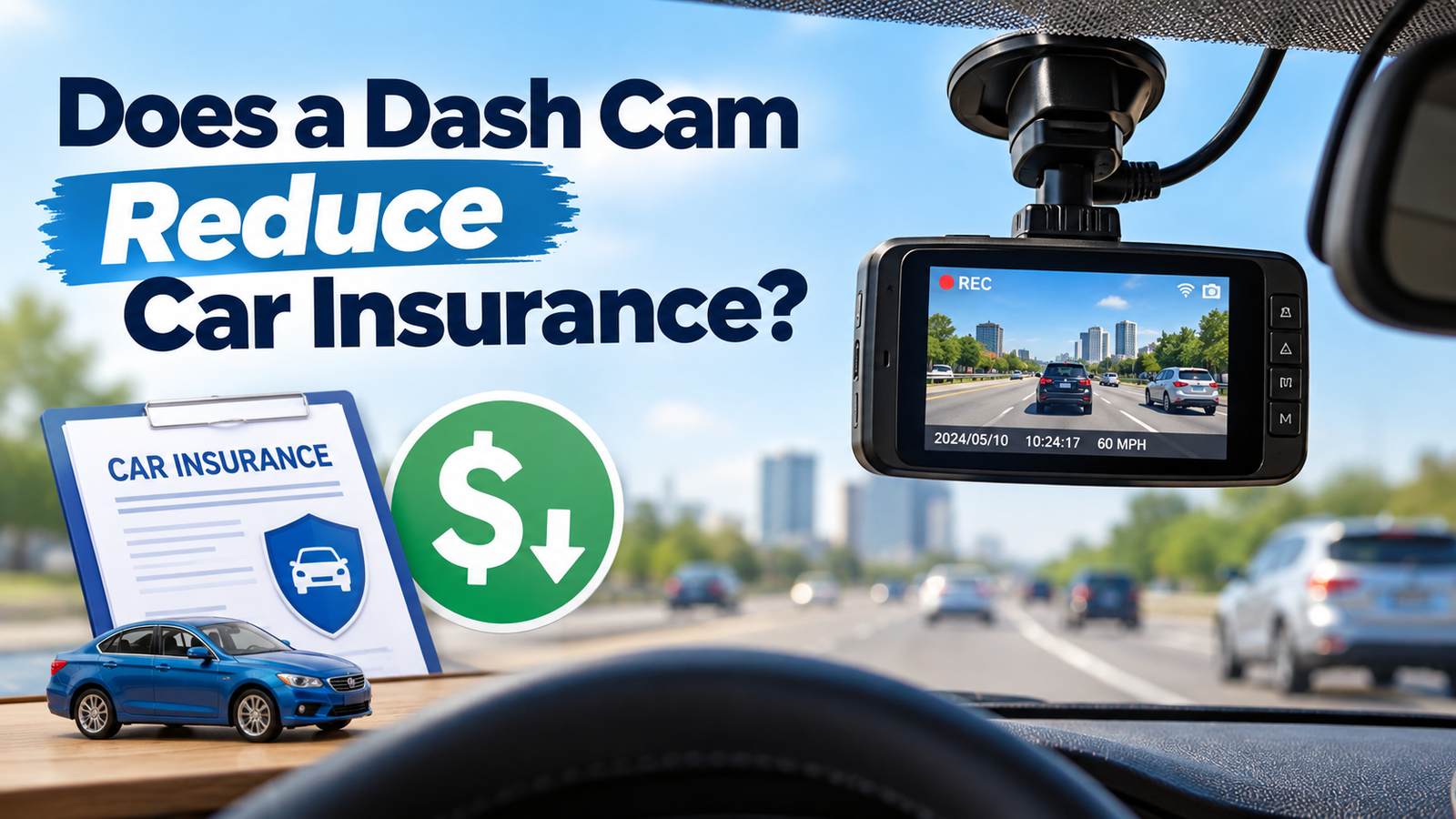
Does a dash cam reduce insurance? Usually, no. Most US drivers should not expect an automatic car insurance discount simply because they install a dash camera. However, a dash cam can provide useful video evidence after an accident, potentially helping an insurer understand what happened and determine who was responsible.
For drivers considering a dash cam, the real value comes from understanding the difference between a direct insurance discount and the potential financial benefits of having reliable accident footage.
Table of Contents
Does a Dash Cam Lower Car Insurance Premiums?
In the United States, a dash cam generally does not qualify for a standard car insurance discount. Progressive explicitly states that it does not offer a dash cam discount, although the company recognizes the potential benefits of camera footage when handling claims.
Insurance discounts depend on the insurer, your state, your policy, and the qualifications you meet. A camera that records your driving is not necessarily an approved insurance-savings device.
Some insurance companies offer savings through usage-based insurance programs. These programs may evaluate mileage and driving behavior through a smartphone app, a vehicle-connected device, or other approved technology. That is different from simply owning a dash cam.
Before purchasing a camera for insurance purposes, contact your insurer or agent and ask whether your specific policy offers any camera-related discount. Get the terms confirmed rather than assuming the device will lower your premium.
How Can a Dash Cam Help With Car Insurance?
Although a dash cam may not directly reduce your premium, recorded footage can be useful when you report a covered incident. It gives the claims adjuster additional information to consider alongside statements, photographs, police reports, and other available evidence.
1. Providing evidence after an accident
Suppose another driver changes lanes and collides with your vehicle. If your camera captures the vehicles’ positions and the events leading up to the collision, the recording may help explain what happened.
Video does not automatically establish fault or guarantee a particular claims outcome. The insurer will consider the available evidence, the policy terms, and applicable state law.
2. Helping clarify disputed claims
When drivers provide conflicting accounts of an accident, clear footage may help the insurance company assess the sequence of events. This can be especially useful when there are few independent witnesses.
Whether a recording changes the outcome depends on its quality, the incident captured, and the other evidence available.
3. Recording hit-and-run incidents
A dash cam may capture another vehicle’s appearance, license plate, direction of travel, or the moment of impact. These details can help when reporting a hit-and-run to law enforcement and your insurer.
License plates may be unreadable because of darkness, glare, motion, or distance. A recording should therefore be treated as potentially useful evidence rather than a guarantee of identifying the other driver.
4. Documenting vandalism or parking incidents
Some cameras offer parking surveillance that records movement or impacts while the vehicle is parked. Depending on the camera, installation, and power arrangement, this may help document vandalism or damage caused by another vehicle.
Parking mode may require a compatible hardwire kit, an external battery, or another power solution. Check the manufacturer’s instructions and your vehicle’s electrical requirements before enabling continuous recording.
Can a Dash Cam Prevent Your Insurance Rate From Increasing?
A dash cam may help support your account of an accident, but it cannot guarantee that your insurance rate will stay the same.
After an accident, an insurer may consider fault, the type of claim, your policy, your claims history, and state-specific rules when determining the effect on your premium. A recording that supports your version of events may help the investigation, but the final decision depends on the circumstances.
Even when a driver is not at fault, premium changes can depend on the insurer and the applicable rules. Do not assume that having video will prevent every rate increase.
Dash Cam vs. Telematics: Which Can Help You Save?
A dash cam and a usage-based insurance program serve different purposes. Understanding the distinction can help you choose the right option.
| Feature | Dash cam | Telematics insurance program |
|---|---|---|
| Main purpose | Records video of road activity | Measures driving behavior or mileage |
| Direct insurance discount | Generally not offered just for owning a camera | May be available through an eligible program |
| Typical information collected | Video, and sometimes audio, GPS, or speed data | May include mileage, braking, acceleration, location, and driving times |
| Potential benefit | Provides evidence for an incident or claim | May reward qualifying driving habits or lower mileage |
| Important limitation | Footage may be incomplete or unclear | Savings depend on program rules and measured driving |
For example, Progressive offers its Snapshot usage-based insurance program in eligible locations. The program is separate from owning a dash cam, and the effect on your rate depends on the program’s terms and your driving information.
Learn more from Progressive’s official guide to telematics and car insurance.
How to Check Whether Your Insurance Company Offers a Dash Cam Discount
Before spending money on a camera specifically to reduce insurance costs, follow these steps.
- Review your current policy. Check the discounts and eligibility requirements listed by your insurer.
- Contact your insurance agent. Ask whether the company offers a discount for installing a dash cam or another approved vehicle safety device.
- Ask about approved savings programs. Find out whether you qualify for safe-driving, low-mileage, defensive-driving, or other available discounts.
- Confirm the conditions. Ask about eligibility, state availability, enrollment requirements, and whether savings apply to your specific coverages.
- Compare total costs. Consider the camera price, memory cards, installation, and any additional power equipment before estimating possible savings.
For a starting point, review the official discount information from Progressive and State Farm. The absence of a listed discount does not replace checking the current terms of your own policy.
What to Look for in a Dash Cam for Insurance Evidence
If your main goal is to have useful footage after an accident, prioritize dependable recording and easy access to saved files rather than marketing claims about insurance savings.
- Clear video quality: Choose a camera that captures useful details in the lighting conditions where you normally drive.
- Reliable loop recording: Many dash cams overwrite older recordings when storage fills up. Look for an event-locking feature that protects important clips.
- A suitable memory card: Follow the manufacturer’s recommendations for card type, capacity, and recording endurance.
- Useful low-light performance: Night footage may be important, but no camera can guarantee readable license plates in every situation.
- Front and rear coverage: A dual-camera setup may capture more of the events surrounding a collision than a front-facing camera alone.
- Parking mode, if needed: Check power requirements and battery-protection features before using the camera while parked.
- Easy file transfer: A camera that lets you export original recordings promptly can make evidence preservation more convenient.
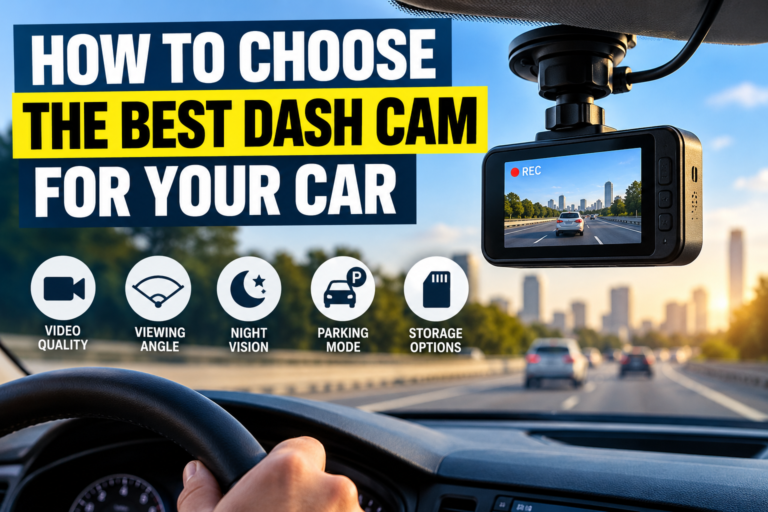
If you are considering a dash cam for accident evidence, understanding video quality, storage, and essential features can help you make the right choice. Read our guide on how to choose the best dash cam before buying.
What to Do With Dash Cam Footage After an Accident
If a collision occurs, prioritize safety and follow the applicable emergency procedures. Once it is safe, these steps can help you preserve potentially relevant evidence.
- Check for injuries and immediate danger. Call emergency services when necessary and follow local reporting requirements.
- Save the recording. Use the camera’s event-lock feature if available. Otherwise, stop recording or remove the storage card only when it is safe and practical to do so, following the manufacturer’s instructions.
- Preserve the original file. Copy the relevant footage to another secure location. Avoid editing, trimming, or overwriting the original recording.
- Record the incident details. Note the date, time, location, vehicles involved, and any relevant report or claim number.
- Contact your insurer. Report the accident according to your policy and ask how to submit the footage securely.
- Keep related evidence. Retain photographs, witness details, repair estimates, and other documents relevant to the claim.
Do not delay necessary accident reporting while trying to retrieve video. Your insurer can explain what files it needs and how to submit them.
Important Dash Cam Laws, Privacy, and Installation Considerations
Before installing or using a dash cam, check the rules that apply where you drive. Requirements can differ by state and may cover windshield obstruction, audio recording, and privacy.
Windshield placement
Mount the camera where it does not obstruct your view of the road. State laws may restrict where devices can be attached to the windshield, so check the rules in your state rather than assuming one mounting location is legal everywhere.
Audio recording and privacy
Some dash cams record conversations as well as video. Audio-recording consent requirements can vary by state and circumstance. Review the applicable law and the camera’s settings, particularly when recording passengers or other people.
Secure handling of recordings
Footage may contain faces, license plates, locations, conversations, and information about other road users. Store files securely and be thoughtful about posting recordings publicly. Ask your insurer how to provide relevant evidence through its approved channels.
Professional installation
A basic plug-in camera may be straightforward to install, but hardwiring a camera into a vehicle’s electrical system can require additional care. Follow the vehicle and camera manufacturers’ instructions, and consult a qualified installer if you are unsure about wiring, battery protection, or airbag locations.
Other Ways to Reduce Your Car Insurance Costs
If saving money is your priority, compare options that insurers actually recognize under their current policies.
- Compare insurance quotes: Obtain quotes for equivalent coverage, limits, and deductibles from several insurers.
- Ask about safe-driver discounts: Eligibility may depend on your driving record or participation in an approved program.
- Check bundling discounts: Some insurers offer savings when eligible auto and home or renters policies are combined.
- Review annual mileage: Accurate mileage information may help you qualify for a low-mileage rate or usage-based program.
- Review your deductible: A higher deductible may lower certain premiums, but it also means paying more out of pocket for a covered claim.
- Remove coverage only after careful consideration: Check your financial exposure and any lender or lease requirements before changing coverage.
For example, State Farm lists several possible auto insurance savings opportunities, including safe-driving, bundling, and other eligibility-based discounts. Availability varies by state and policy.
See State Farm’s official auto insurance discounts page for details.
Frequently Asked Questions
Does a dash cam reduce insurance in the US?
Usually, no. A dash cam generally does not qualify for a standard US auto insurance discount. Its main insurance-related benefit is that footage may help document an accident or support a claim.
Which insurance companies offer dash cam discounts?
Do not assume that any particular insurer offers a discount solely for owning a dash cam. Progressive states that it does not offer this discount. Contact your insurer to confirm its current offerings and your state’s eligibility rules.
Can dash cam footage prove I was not at fault?
Footage can support your account of an accident, but it does not automatically determine fault. The insurer or other relevant decision-maker may consider the recording alongside statements, photographs, reports, policy terms, and applicable law.
Can a dash cam help with a hit-and-run claim?
Yes, potentially. A recording may capture a vehicle, license plate, or the circumstances of an incident. Image quality and camera coverage vary, so a usable recording is not guaranteed.
Is a dash cam worth buying if it does not lower insurance?
It may be worthwhile if you value having a record of road incidents, potential hit-and-runs, or disputed collisions. Consider the total cost and limitations before buying one, and do not treat it as a substitute for insurance coverage.
Is a dash cam the same as a usage-based insurance device?
No. A dash cam primarily records video, while a usage-based insurance program may measure mileage and driving behavior through an app, a connected device, or other approved technology. A qualifying telematics program may offer savings under its terms.
Final Verdict: Is a Dash Cam Worth It for Insurance?
A dash cam usually will not lower your car insurance premium directly in the United States. However, it can be a useful tool for documenting accidents and providing additional evidence when an insurance claim is disputed.
If you are buying one primarily to save money, check with your insurer before making the purchase. For more predictable savings opportunities, compare insurance quotes and ask about eligible safe-driver, bundling, and low-mileage discounts.
The bottom line: Buy a dash cam for the recording and evidence it may provide, not because you expect an automatic insurance discount.