What Car Accessories Are Worth Buying? 12 Practical Upgrades for Everyday Drivers
Not every car accessory deserves a place in your vehicle. Some products solve everyday problems, help you prepare for roadside emergencies, or make your car easier to maintain. Others add clutter without offering much practical value.
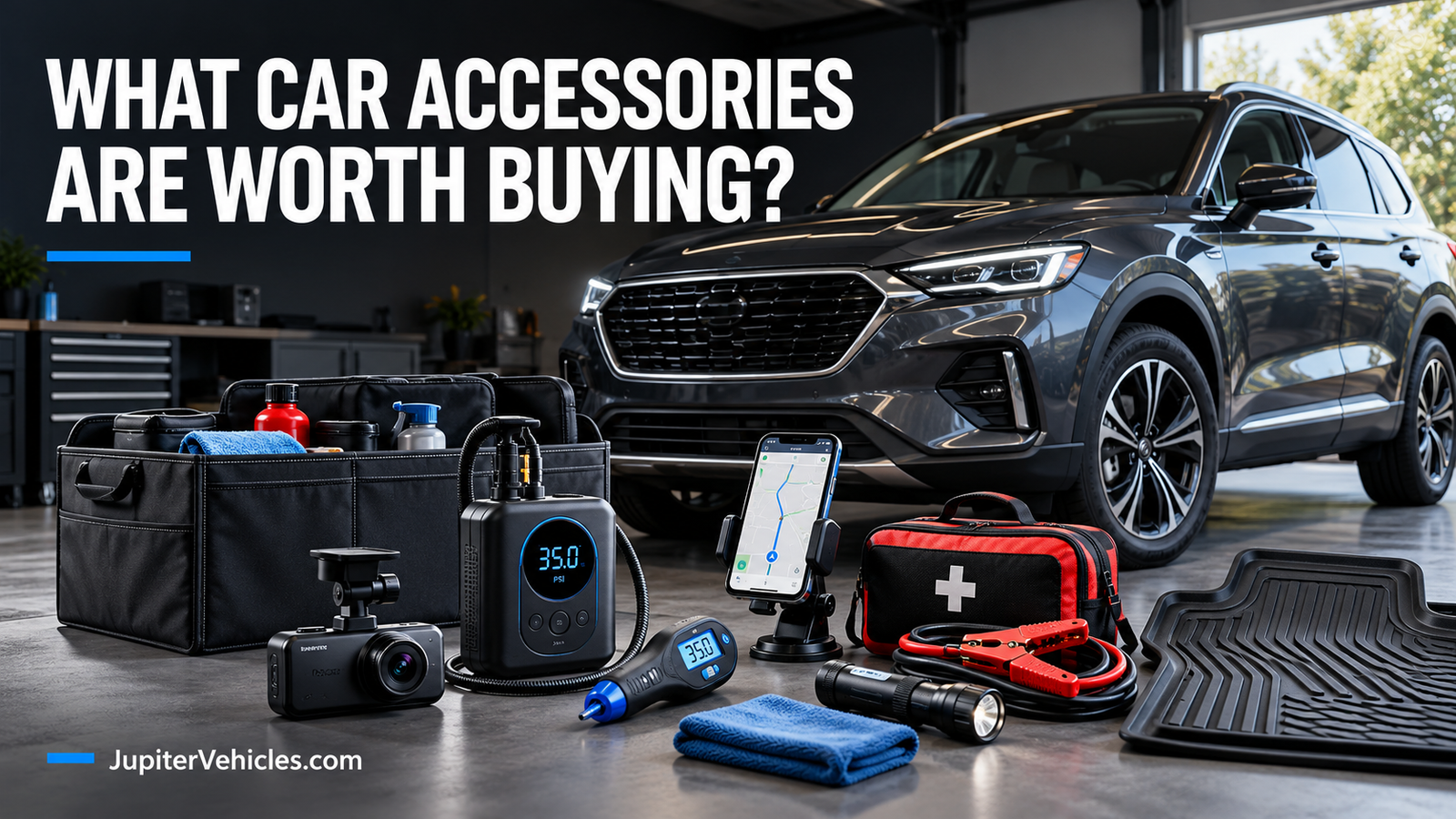
The car accessories worth buying are generally the ones that improve preparedness, protect your vehicle’s interior, simplify routine tasks, or make everyday driving more convenient. For most drivers, a roadside emergency kit, tire pressure gauge, portable tire inflator, dash cam, and well-designed trunk organizer are sensible places to start.
The best choices depend on how you use your vehicle, what equipment it already includes, and how much you want to spend. A daily commuter may benefit from a reliable phone mount, while someone who regularly travels long distances may place greater value on emergency supplies and a jump starter.
This guide explains which car accessories are worth considering, what to look for before buying, and which popular gadgets you can probably skip.
Table of Contents
What Car Accessories Are Worth Buying First?
If you want to avoid unnecessary purchases, prioritize accessories according to their usefulness rather than their appearance.
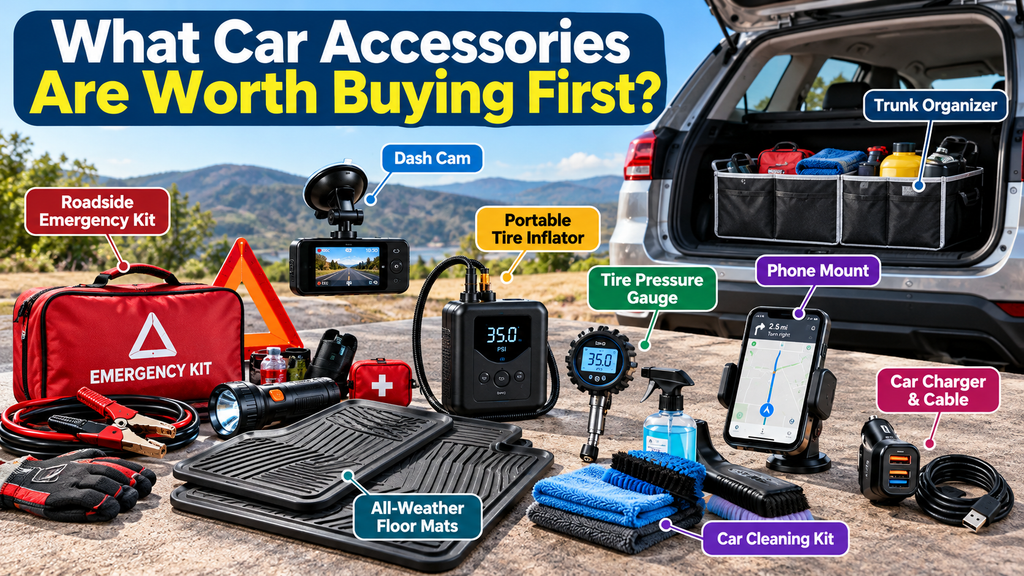
Here are the categories worth considering first:
- Emergency preparedness: A roadside emergency kit, flashlight, first-aid supplies, and suitable jumper cables.
- Tire maintenance: A reliable tire pressure gauge and a compatible portable inflator.
- Driving documentation: A dash cam that records clear footage and saves important clips.
- Everyday convenience: A secure phone mount, charging accessories, and a trunk organizer.
- Interior protection: Properly fitted floor mats and useful cleaning supplies.
- Long-distance comfort: Travel organizers, sunshades, and other items suited to your vehicle and climate.
You do not need to buy everything at once. Start with missing essentials, then add convenience accessories that solve problems you encounter regularly.
1. Dash Cam
A dash cam is one of the most useful car accessories for drivers who want a video record of their journeys. It can document road conditions and provide footage that may help explain what happened during a collision or another incident.
What makes a dash cam worth buying?
Look for these features:
- Clear daytime and nighttime recording.
- A wide enough field of view to capture relevant road activity.
- Reliable loop recording that replaces older footage when storage fills.
- Automatic incident recording or file protection.
- A straightforward way to review and export footage.
- Adequate storage support and a compatible memory card.
A front-facing camera is a reasonable starting point. A dual-channel model that records the front and rear may be useful if you want broader coverage, although it costs more and may require additional installation.
Parking surveillance is another feature to consider. However, it can require a compatible hardwire kit, suitable power management, and additional installation. Check how the camera handles battery protection before enabling continuous parking recording.
Best for: Commuters, frequent travelers, and drivers who want a record of road incidents.
What to watch out for: A dash cam does not prevent collisions or guarantee that footage will settle an insurance claim. Check local rules concerning recording, privacy, and where cameras may be mounted.
2. Portable Tire Inflator
A portable tire inflator can make routine tire-pressure maintenance more convenient. Instead of searching for an air compressor, you can check your tires and add air when necessary.
Features worth considering
- A pressure display that is easy to read.
- A suitable pressure range for your vehicle.
- A hose and connector compatible with your tire valves.
- An appropriate power source, such as a 12-volt outlet or rechargeable battery.
- Automatic shutoff, if available.
- A cable or battery capacity suitable for the number of tires you need to service.
A portable inflator is particularly useful before road trips and when a tire needs a small pressure adjustment. It is not a substitute for tire inspection or professional repair.
Follow the vehicle manufacturer’s recommended tire pressure, usually shown on the driver’s doorjamb label or in the owner’s manual. Do not use the maximum pressure printed on the tire sidewall as the normal target pressure.
The US National Highway Traffic Safety Administration recommends checking tire pressure at least monthly when tires are cold. Its tire safety guidance also explains that a tire-pressure monitoring system does not eliminate the need for manual checks.
Best for: Daily drivers, road-trip travelers, and people who prefer to handle routine tire checks themselves.
What to watch out for: A damaged tire, sidewall bulge, repeated pressure loss, or persistent warning light requires appropriate inspection. An inflator cannot repair structural tire damage.
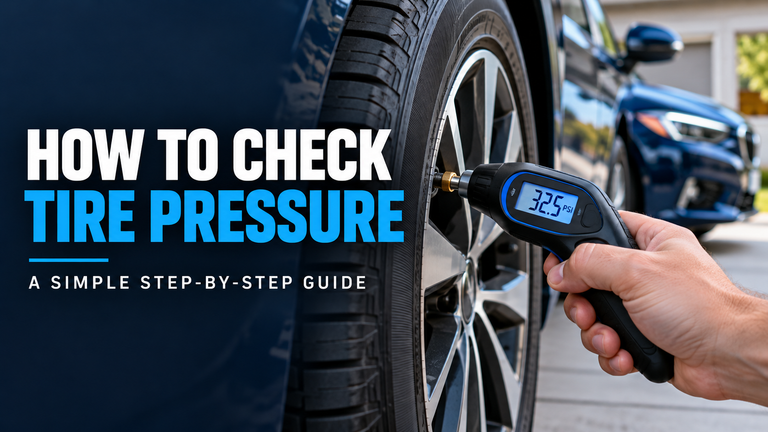
3. Tire Pressure Gauge
Even if you own a portable inflator, a separate tire pressure gauge can be worthwhile. It provides a straightforward way to check whether your tires are inflated to the recommended pressure.
Digital gauges are often easy to read, while analog models can work well without batteries. The more important considerations are usability, durability, and a pressure range appropriate for your vehicle.
Choose a gauge with a clear display and a valve connection that is easy to use. Keep it somewhere accessible rather than buried beneath luggage in the trunk.
Checking pressure regularly can help you identify underinflation before it becomes a larger problem. It also allows you to verify the reading from an inflator instead of relying entirely on one device.
Best for: Every vehicle owner, especially anyone who travels frequently.
What to watch out for: Check pressure when the tires are cold and use the manufacturer’s recommended value. A gauge does not replace inspections for tread wear, cuts, cracks, or other damage.
4. Roadside Emergency Kit
A roadside emergency kit is one of the most practical accessories you can buy because it prepares you for situations that cannot always be predicted.
Even a well-maintained vehicle can experience a breakdown, a flat tire, or another unexpected problem. Having essential supplies available may make it easier to manage the situation while waiting for assistance.
What should a car emergency kit contain?
Consider including:
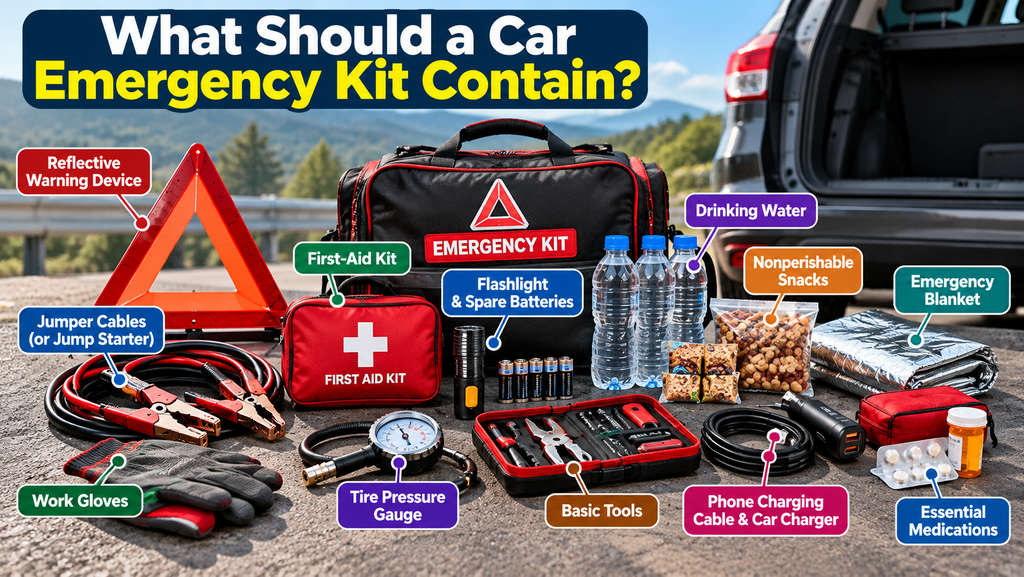
- A first-aid kit.
- A flashlight and spare batteries.
- A reflective warning device suitable for local road conditions.
- Work gloves.
- A tire pressure gauge.
- Drinking water and nonperishable snacks.
- Emergency blankets appropriate for the climate.
- A phone charging cable and suitable power source.
- Basic tools appropriate for your vehicle.
- Any essential personal medication you need while traveling.
Jumper cables or a compatible jump starter may also be useful, but they should be selected and used according to the vehicle manufacturer’s instructions.
If you carry equipment for changing a tire, make sure you understand the vehicle’s approved jacking points and safe procedure. Never work beneath a vehicle supported only by a jack.
Best for: Families, commuters, new drivers, and anyone who regularly drives outside familiar areas.
What to watch out for: Check the kit periodically. Replace expired medical supplies, damaged equipment, depleted batteries, and items affected by heat or moisture.
5. Portable Jump Starter
A portable jump starter can be useful when a conventional 12-volt starter battery cannot provide enough power to start the engine.
Unlike traditional jumper cables, a self-contained jump starter does not necessarily require another vehicle. This can be helpful when traveling alone or parking in areas where assistance may not be immediately available.
Before purchasing one, check:
- Compatibility with your vehicle and its battery system.
- The manufacturer’s supported engine and battery applications.
- Safety protections and clear connection instructions.
- Whether the unit requires a separate charging cable.
- Storage conditions and periodic recharging requirements.
A compact unit may be sufficient for some smaller vehicles, while other vehicles require a different specification. Do not choose a jump starter based on its advertised peak-current number alone.
Modern vehicles may have specific jump-starting procedures. Hybrid and electric vehicles can also have different electrical systems, so never assume that a standard jump starter can be used to start a high-voltage traction system.
Best for: Drivers who want additional roadside preparedness and understand their vehicle’s starting system.
What to watch out for: Never connect equipment in a way that conflicts with the owner’s manual. A jump starter will not fix a failed battery, damaged wiring, or another underlying fault.
6. Phone Mount
A well-designed phone mount can make navigation easier by keeping the phone in a stable, accessible position.
This accessory is most useful when your car lacks a convenient built-in navigation display. However, mounting a phone does not make it safe to interact with the device while driving.
What to look for
- A secure grip that holds the phone over uneven roads.
- Compatibility with your phone’s size and case.
- A mounting position that does not obstruct your view.
- Easy installation without damaging interior surfaces.
- Adequate clearance around controls, vents, and charging ports.
Vent mounts, dashboard mounts, and windshield mounts each have advantages and limitations. The right option depends on the vehicle’s interior and applicable mounting rules.
Set up your navigation route before moving, enable voice guidance when appropriate, and avoid touching the screen while driving. The US NHTSA identifies phone use and navigation adjustments as potential distractions.
Best for: Drivers who regularly use navigation apps.
What to watch out for: Avoid mounts that block the windshield, interfere with airbags, or force you to look away from the road for extended periods. A mount is a convenience accessory, not a safety solution for distracted driving.
7. Car Charger and Charging Cable
A reliable car charger is a useful purchase if you frequently use your phone for navigation, music, or communication.
Before buying, check whether your vehicle already provides sufficient charging ports. If it does, you may need only a compatible cable rather than an additional adapter.
Features worth checking
- Compatibility with your phone.
- Appropriate charging standards and power output.
- Enough ports for your passengers’ devices.
- Secure fit in the vehicle’s power outlet.
- A cable length that does not create clutter or interfere with controls.
USB-C charging may be useful for newer devices, but the connector alone does not determine charging speed. Both the charger and connected device must support the relevant charging capabilities.
Wireless charging can reduce cable clutter, although it may produce more heat and may charge more slowly under certain conditions.
Best for: Commuters, families, and drivers who rely on their phones during travel.
What to watch out for: Avoid poorly made chargers and damaged cables. Route cables away from pedals, the steering column, and other moving controls.
8. Trunk Organizer
A trunk organizer is a simple accessory that helps keep groceries, cleaning supplies, travel equipment, and other everyday items in place.
It is particularly useful if you frequently carry several small items that otherwise move around while the car is in motion.
What makes a good organizer?
Look for:
- A size that fits your cargo area.
- Compartments suited to the items you carry.
- Sturdy handles and durable construction.
- A foldable design if you need to reclaim space.
- Secure attachment points or a nonslip base.
A compact organizer may be enough for shopping bags and basic supplies. Larger designs can be useful for families, outdoor activities, or longer journeys.
The goal is not to fill the trunk with storage products. It is to make existing cargo easier to manage.
Best for: Families, shoppers, commuters, and people who regularly carry tools or travel supplies.
What to watch out for: Heavy objects should be secured appropriately. Do not allow cargo or organizers to interfere with visibility, vehicle controls, or required safety equipment.
9. All-Weather Floor Mats
Floor mats help protect the original carpet from mud, rainwater, dust, food spills, and everyday wear.
All-weather mats are especially useful for drivers who regularly encounter wet weather, muddy footwear, or outdoor activities. Carpet mats may be preferable if appearance and a softer finish are more important than handling heavy dirt.
What to check before buying
- Exact fit for your vehicle’s make, model, and model year.
- Compatibility with the original retention clips.
- Coverage of the relevant footwell.
- A surface that can be cleaned easily.
- Edges that help contain ordinary dirt and moisture.
Universal mats can be less expensive, but a poor fit can create problems around the pedals.
Best for: Families, pet owners, commuters, and drivers in wet or dusty environments.
What to watch out for: Never stack mats in the driver’s footwell. Use the approved retention system and make sure the mat cannot slide beneath the pedals or interfere with their full movement.
10. Car Cleaning Kit
A small car cleaning kit can help you maintain the interior without repeatedly buying disposable products.
You do not need an elaborate collection of detailing chemicals. For many drivers, a few microfiber towels, a suitable interior cleaner, a soft brush, and a small waste bag are enough for basic upkeep.
If you want to clean the exterior, select products designed for automotive paint and the relevant surfaces. Different materials may require different cleaners.
Useful items to consider
- Microfiber towels.
- A soft interior brush.
- An automotive interior cleaner compatible with your materials.
- Glass cleaner suitable for vehicle windows.
- A small waste container or disposable bags.
- A compact vacuum if you regularly collect dust, crumbs, or pet hair.
Best for: Drivers who want to maintain a tidy interior and protect frequently used surfaces.
What to watch out for: Avoid applying products to steering wheels, pedals, or other surfaces where residue could reduce grip. Follow product labels and vehicle-specific cleaning guidance.
11. Sunshade
A windshield sunshade can help reduce direct sunlight entering a parked vehicle. It may also make the steering wheel, dashboard, and seats more comfortable to approach after the car has been sitting in the sun.
This accessory is particularly useful in hot climates or when outdoor parking is unavoidable.
Choose a shade that fits the windshield closely and can be installed without obstructing your view when driving. Reflective materials may help limit direct solar exposure, but the result depends on the vehicle, the weather, and how the shade is used.
Best for: Drivers who park outdoors, commuters, and people living in sunny climates.
What to watch out for: A sunshade cannot prevent all cabin heating. Never leave children or pets unattended in a parked vehicle, even if the windows are partly open or a shade is installed.
12. Seat Covers
Seat covers can protect upholstery from ordinary wear, food spills, dirt, and pet hair. They may also make an older interior look cleaner.
However, this is an accessory where compatibility matters more than appearance.
What to consider
- Whether the cover is designed for your specific seats.
- Compatibility with side airbags.
- Whether it affects seat-mounted controls or sensors.
- The ease of installation and cleaning.
- Whether the material is suitable for your climate.
Drivers with children or pets may appreciate washable covers. Others may prefer to keep the original upholstery uncovered.
Best for: Families, pet owners, and drivers who frequently transport dirty equipment.
What to watch out for: Never use a cover that interferes with airbag deployment or seatbelt operation. Check the vehicle manual and cover manufacturer’s compatibility information before installation.
Car Accessories That May Not Be Worth Buying
Not every popular automotive gadget provides meaningful value. Some products duplicate features already available in your car, while others create additional maintenance or safety concerns.
Here are several categories to evaluate carefully.
Decorative interior lighting
Ambient lighting can personalize your cabin, but it offers limited practical value for drivers who mainly need better organization or emergency preparedness. Poorly positioned lights may create distracting reflections or glare.
If you choose interior lighting, ensure it is installed securely and does not interfere with visibility, vehicle wiring, or controls.
Cheap electronic gadgets
Very inexpensive electronics can be tempting, particularly when they advertise numerous functions in one compact device. However, unclear specifications, questionable build quality, and unreliable connections can make them poor long-term purchases.
Look for clear documentation, appropriate electrical compatibility, and a credible return policy rather than choosing solely by price.
Oversized seat cushions
A cushion may seem like an easy way to improve comfort, but a poorly fitted product can change your seating position or interfere with seatbelts, airbags, and head restraints.
If you experience discomfort while driving, check your seating adjustment first and seek appropriate professional advice if the problem persists.
Gadgets that promise dramatic fuel savings
Be cautious about plug-in devices or accessories claiming to produce substantial fuel savings without credible, vehicle-specific evidence. A product’s marketing language is not proof of improved efficiency.
Routine maintenance, appropriate tire pressure, and sensible driving habits are more defensible starting points than unverified electronic add-ons.
Duplicate accessories
Before buying a standalone navigation device, charging adapter, or storage product, check what your vehicle already provides. You may discover that a built-in feature or a simpler accessory already meets your needs.
How to Choose Car Accessories Without Wasting Money
A practical purchasing process can help you avoid accumulating gadgets you rarely use.
Step 1: Identify a real problem
Think about the situations that inconvenience you most often. Do you struggle to keep the trunk organized? Need to check tire pressure at home? Want a video record of your journeys? Start with that specific need.
Step 2: Check vehicle compatibility
Confirm the make, model, model year, and relevant configuration before buying vehicle-specific equipment. Pay particular attention to floor mats, seat covers, electrical accessories, and anything installed near airbags or controls.
Step 3: Prioritize safety and preparedness
If your budget is limited, consider emergency supplies, tire-maintenance tools, and other items that address practical needs before decorative accessories.
Remember that accessories supplement proper vehicle maintenance. They cannot compensate for worn tires, faulty brakes, damaged safety systems, or overdue servicing.
Step 4: Compare the total cost
The purchase price is only one part of the cost. Some products need replacement batteries, memory cards, mounting hardware, installation, or periodic maintenance.
A simpler accessory with clear specifications may be better value than a complicated product with features you will rarely use.
Step 5: Read the instructions before installation
Follow both the accessory manufacturer’s directions and your vehicle owner’s manual. If installation involves vehicle wiring, safety systems, or uncertain electrical compatibility, seek a qualified installer.
Step 6: Avoid buying everything at once
Start with the accessories that solve your most important problems. Use them regularly, then decide whether another purchase would provide a meaningful benefit.
Best Car Accessories by Type of Driver
| Driver type | Accessories worth considering | Why they may help |
|---|---|---|
| Daily commuter | Phone mount, charger, tire gauge | Navigation and routine maintenance |
| New car owner | Emergency kit, tire gauge, trunk organizer | Preparedness and organization |
| Road-trip traveler | Emergency kit, inflator, jump starter, dash cam | Support for longer journeys |
| Family driver | Floor mats, trunk organizer, first-aid kit | Easier cleaning and practical storage |
| Outdoor enthusiast | All-weather mats, cleaning kit, emergency supplies | Managing dirt and travel equipment |
| Urban driver | Dash cam, secure phone mount, compact organizer | Documentation and everyday convenience |
| Budget-conscious owner | Tire gauge, basic emergency supplies, cleaning cloths | Useful basics without unnecessary extras |
These are starting points, not universal requirements. Your vehicle’s existing equipment, local conditions, and driving habits should determine the final selection.
Frequently Asked Questions
What are the most useful car accessories to buy first?
A basic roadside emergency kit and a reliable tire pressure gauge are sensible starting points for many drivers. A portable inflator, dash cam, or trunk organizer may be the next purchase, depending on your needs and the equipment your vehicle already includes.
Are expensive car accessories always better?
No. Price alone does not establish quality or usefulness. Prioritize compatibility, clear specifications, durability, safety, and the ability to solve a real problem. A simple, well-made accessory can offer more value than a feature-heavy product you rarely use.
Is a dash cam worth buying for an everyday car?
It can be, particularly if you want a record of road incidents. Before purchasing, consider video quality, storage, nighttime performance, installation, privacy requirements, and the cost of any additional equipment. Footage may help document an incident, but it does not guarantee a particular insurance or legal outcome.
Should I buy a portable tire inflator?
A portable inflator can make routine tire-pressure maintenance more convenient. Choose a model suitable for your vehicle and follow the recommended pressure in the owner’s manual or on the vehicle’s tire-information label. Do not use an inflator as a substitute for professional inspection of a damaged tire.
Are universal car accessories a good choice?
They can be useful when the product genuinely fits your vehicle and does not interfere with safety equipment. Universal organizers and some cleaning supplies may be straightforward choices. Floor mats, seat covers, and electrical accessories require closer compatibility checks.
What car accessories should I avoid?
Be cautious with products that make unsupported fuel-saving claims, poorly documented electrical gadgets, badly fitted seat covers, and accessories that obstruct visibility or interfere with controls. Decorative products are not automatically bad purchases, but they should come after more useful needs have been addressed.
Do car accessories improve fuel economy?
Some accessories support routine maintenance, but that does not mean every product marketed for fuel savings works. Maintaining the recommended tire pressure and following the manufacturer’s service schedule are sensible practices. Treat dramatic fuel-economy claims with skepticism unless credible evidence supports them for your vehicle.
How much should I spend on car accessories?
There is no single budget that works for every driver. Start by identifying missing essentials and compare their cost with how frequently you expect to use them. You can build a practical collection gradually rather than purchasing a complete set of gadgets immediately.
Final Thoughts
The car accessories worth buying are the ones that make your vehicle easier to maintain, help you prepare for unexpected situations, or solve everyday problems without introducing new risks.
For most drivers, a tire pressure gauge, roadside emergency supplies, and a suitable portable inflator are practical starting points. A dash cam, phone mount, trunk organizer, floor mats, and cleaning kit can add value when they match your driving habits.
Before spending money, check what your car already includes, verify compatibility, and read the relevant instructions. Prioritizing a few useful accessories over a large collection of gadgets is usually the more practical approach.