What Is Normal Tire Pressure? Typical Ranges and Normal Changes
Normal tire pressure is the cold pressure your vehicle manufacturer recommends on the label inside the driver’s door. For many passenger cars, that number falls somewhere in the low-to-mid 30s PSI, while pickups, vans, and SUVs can be higher, and compact spare tires are often much higher still. Because the right number depends on your exact vehicle and tire size, “normal” for your car is whatever your door label says.
This guide covers typical ranges, the pressure changes that are completely normal, and the ones that signal a problem.
Table of Contents
Typical Tire Pressure Ranges
These are general patterns, not recommendations. Always use your door label.
| Vehicle type | What you’ll often see on the label |
|---|---|
| Passenger cars and sedans | Commonly in the low-to-mid 30s PSI |
| Crossovers and SUVs | Often similar to cars, sometimes a little higher |
| Pickups and vans | Can be higher, especially with load-rated tires |
| Compact (temporary) spare | Often much higher than the road tires; check the label |
If your reading is close to the figure on your label when the tires are cold, it’s normal. If you’re not sure where the label is, see what should my tire pressure be.
Pressure Changes That Are Normal
Warm tires read higher
Driving heats your tires and raises the pressure. NHTSA says recommended pressures apply to cold tires, meaning not driven for at least three hours. A higher reading after a drive is expected.
Cold weather lowers pressure
Bridgestone says tire pressure changes by about 1 psi for every 10°F change in outside temperature. A sharp cold snap can drop your pressure enough to trigger the warning light.
Slow loss over time
Bridgestone also notes tires lose about 1 psi per month on average. A small drop between monthly checks is normal.
Small differences between tires
Tires on the same car rarely read exactly the same. A small difference is usually nothing to worry about, but top them up to the label figure.
Readings That Aren’t Normal
| What you see | What it might mean |
|---|---|
| One tire keeps dropping faster than the others | Puncture, valve leak, or wheel-seal leak |
| Pressure far below the label | Underinflation; add air and check for leaks |
| Cold pressure well above the label | Overinflation; release air to the label figure |
| TPMS warning light | At least one tire is well below the recommended pressure |
| Visible bulge or damage | Stop and have the tire inspected |
The TPMS warning isn’t an early alert. Under the U.S. TPMS standard, it relates to a tire being about 25% below the cold placard pressure, so it means a tire is already significantly low.
If one tire keeps losing air, our guide on how to plug a tire explains what can and can’t be repaired.
Why Normal Pressure Matters
Running tires at the recommended pressure helps them wear evenly, supports the vehicle’s handling and braking as the manufacturer intended, and helps fuel economy. Underinflated tires flex more and build up more heat, while overinflated tires have a smaller contact patch with the road.
How to Keep Your Tire Pressure Normal
- Check every tire, including the spare, at least once a month.
- Check in the morning before driving, when tires are cold.
- Top up to the door-label figure.
- Check more often when the weather turns cold.
A reliable gauge makes monthly checks quick.
Affiliate disclosure: As an Amazon Associate I earn from qualifying purchases.

- RUGGED DESIGN: The stainless steel components prevent rust and corrosion while the precision-crafted nozzle seamlessly seals onto the valve stems for highly accurate readings (±2% span). We also provide 4 valve stem caps for convenient replacement.
- MEASURES PSI, kPa, BAR; Measurement range from 10-75 PSI, 70-550 kPa, 0.7-5.5 BAR. Attention! Do not exceed the maximum pressure of the gauge, doing so will permanently damage the device.
- UNIVERSAL APPLICATION: Not only are these gauges easy to use, but include an integrated deflator valve, chuck, and ABS indicator bar
- CONVENIENT DESIGN stows easily in a glove box, tool belt, workbench, or even a pocket; the pocket clip makes it easy to carry with you while on the job
- Further service provided by AstroAI, BATTERY FREE means no maintenance and total reliability under all weather conditions; a necessary tool for roadtrips and optimal safety

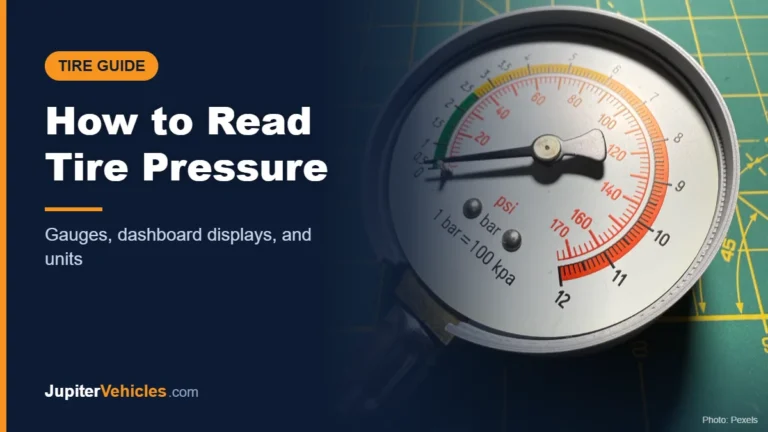
For more, see how to read tire pressure and our guide to the best tire pressure gauge.
Frequently Asked Questions
Is 35 PSI normal tire pressure?
For many passenger cars, 35 PSI is close to the recommended figure, but your car may specify something different. Check your door label.
Is 40 PSI too high for my tires?
It may be, if your label lists a lower number. Use the door-label figure, measured cold. The sidewall number is a maximum, not a target.
Is it normal for tire pressure to drop in winter?
Yes. Pressure drops as temperatures fall, so check and top up more often in cold weather.
What’s normal pressure for a spare tire?
Compact spares often need much higher pressure than regular tires. Check the spare pressure listed on your door label or in the owner’s manual.
The Takeaway
Normal tire pressure is your vehicle’s door-label figure, measured cold. Expect higher readings after driving, lower readings in cold weather, and a slow drop over time. A tire that keeps losing pressure faster than the others isn’t normal and should be checked.