How to Read a Check Engine Light: Solid vs. Flashing, Colors and What to Do
JupiterVehicles is reader-supported. As an Amazon Associate, we earn from qualifying purchases.
The check engine light is your car’s way of saying its computer found a problem, usually with the engine or emissions system. Before you plug anything in, the light itself tells you a lot: whether it’s steady or flashing, what else is lit, and how the car is driving. This guide explains how to read those signals and what to do next.
If you already have a scanner and want to pull the codes, see how to check check engine light codes.
Table of Contents
What the Check Engine Light Means
The light, also called the malfunction indicator lamp (MIL), comes on when the car’s onboard diagnostic (OBD II) system detects a fault. The California Air Resources Board’s OBD II fact sheet explains that the system monitors emissions-related components and alerts the driver when something isn’t working properly. When the light comes on, the computer also stores a diagnostic trouble code you can read with a scanner.
Step 1: Check Whether It’s Solid or Flashing
| What you see | What it usually means | What to do |
|---|---|---|
| Light on briefly at startup, then off | Normal bulb check | Nothing |
| Solid (steady) light | A fault that isn’t an emergency right now | Get the code read soon |
| Flashing light | A serious problem, often a severe engine misfire | Reduce speed and get it checked right away |
| Light comes and goes | An intermittent fault | Still get the code read |
A flashing check engine light often means a misfire that can send unburned fuel into the exhaust and overheat the catalytic converter. Avoid hard acceleration and heavy loads, and get the car checked promptly.
Step 2: Look at the Other Warning Lights
The check engine light tells you to investigate. Other lights can mean you should stop immediately:
- Red oil pressure light: pull over safely and turn off the engine.
- Red temperature light or gauge in the red: pull over and let the engine cool.
- Battery or charging light: the alternator may be failing. The car may run only until the battery drains.
If the check engine light comes with any of these, or the car is running roughly, stalling or losing power, stop driving and get help.
Step 3: Notice How the Car Feels
- Runs normally: likely a sensor, emissions or evaporative system issue.
- Rough idle or shaking: possible misfire.
- Loss of power: the car may be in a reduced-power or limp mode.
- Fuel smell: possible leak. Stop and get help.
Step 4: Check the Gas Cap
A loose or damaged gas cap is a common cause of evaporative system codes. Tighten it until it clicks, and inspect the seal. The light won’t turn off right away. It may take several drives for the system to recheck.
Step 5: Read the Code
The light can’t tell you the exact problem. The code can. Use an OBD2 scanner, or ask an auto parts store if it offers free code reading. Codes follow a standard format:
| Code part | Example | Meaning |
|---|---|---|
| First letter | P | System: P = powertrain, B = body, C = chassis, U = network |
| First digit | 0 | 0 = generic code, 1 = manufacturer-specific |
| Last three digits | 300 | The specific fault (P0300 = random/multiple misfire detected) |
Learn more about the tools in what is an OBD2 scanner, and if you’re shopping, see what OBD2 scanner you should buy.
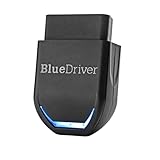
- [Diagnose Like a Pro] BlueDriver Pro is a professional OBD2 scanner and diagnostic tool that helps you scan, understand, and clear vehicle trouble codes with confidence. Turn your phone into a powerful car diagnostic scanner—no guesswork, no unnecessary repairs.
- [Read and Clear More Codes Than Ever] Read and clear more codes than basic car code readers. Access enhanced diagnostics for Check Engine, ABS, SRS, Airbag, TPMS, Transmission, and more on supported vehicles, including expanded coverage on newer model years.
- [Verified Fixes and Real-Time Data] Get unlimited, technician-verified repair reports matched to your VIN, with definitions, causes, and confirmed fixes. Monitor live vehicle data as you drive, view freeze frames, check smog readiness, and analyze Mode 6 test results.
- [Expanded Make & Model Coverage] Optimized for today's vehicles with strong support for GM, Ford, Stellantis (RAM, Jeep, Chrysler), Toyota, Honda, Nissan, Mazda, Subaru, Hyundai, Mercedes-Benz, BMW, and VW. Enhanced communication on select 2024+ Nissan and Mazda models (see compatibility chart).
- [Gas Vehicles 1996+ & Select Light-Duty Trucks] Works with all gas-powered vehicles made in 1996 or newer, plus select light-duty trucks and diesels, including F-250, RAM 2500, Silverado, and Sierra. Built for daily drivers, family vehicles, and real-world truck use.
Step 6: Decide What to Do Next
- Simple fix (gas cap): fix it and watch whether the light goes off over the next few drives.
- Sensor or emissions code, car runs fine: schedule a repair soon.
- Misfire or flashing light: get it checked right away.
- Code you don’t understand: search the exact code with your car’s make, model and year, or ask a mechanic.
Can You Drive With the Check Engine Light On?
With a steady light and no other symptoms, most cars can be driven carefully to a shop. With a flashing light, other red warning lights, or obvious drivability problems, stop driving and arrange help. Ignoring a steady light for weeks can turn a cheap fix into an expensive one.
Frequently Asked Questions
What’s the difference between a solid and flashing check engine light?
A solid light means the car detected a fault that needs attention soon. A flashing light usually means a severe misfire and needs attention right away.
Will the check engine light turn off by itself?
Sometimes. If the problem goes away, such as a tightened gas cap, the light may turn off after several drive cycles.
Can I reset the check engine light without a scanner?
Disconnecting the battery can clear it on some cars, but it also resets other settings and doesn’t fix the problem. A scanner is the better way.
Does a check engine light mean my car will fail inspection?
In many areas, yes. An active check engine light is a common reason for failing an emissions inspection.
Is the check engine light always serious?
No. It can be as minor as a loose gas cap, but you won’t know until you read the code.
The Bottom Line
To read a check engine light, first note whether it’s solid or flashing, check for other warning lights and symptoms, then tighten the gas cap and read the trouble code. A steady light means get it checked soon. A flashing light means get it checked now.